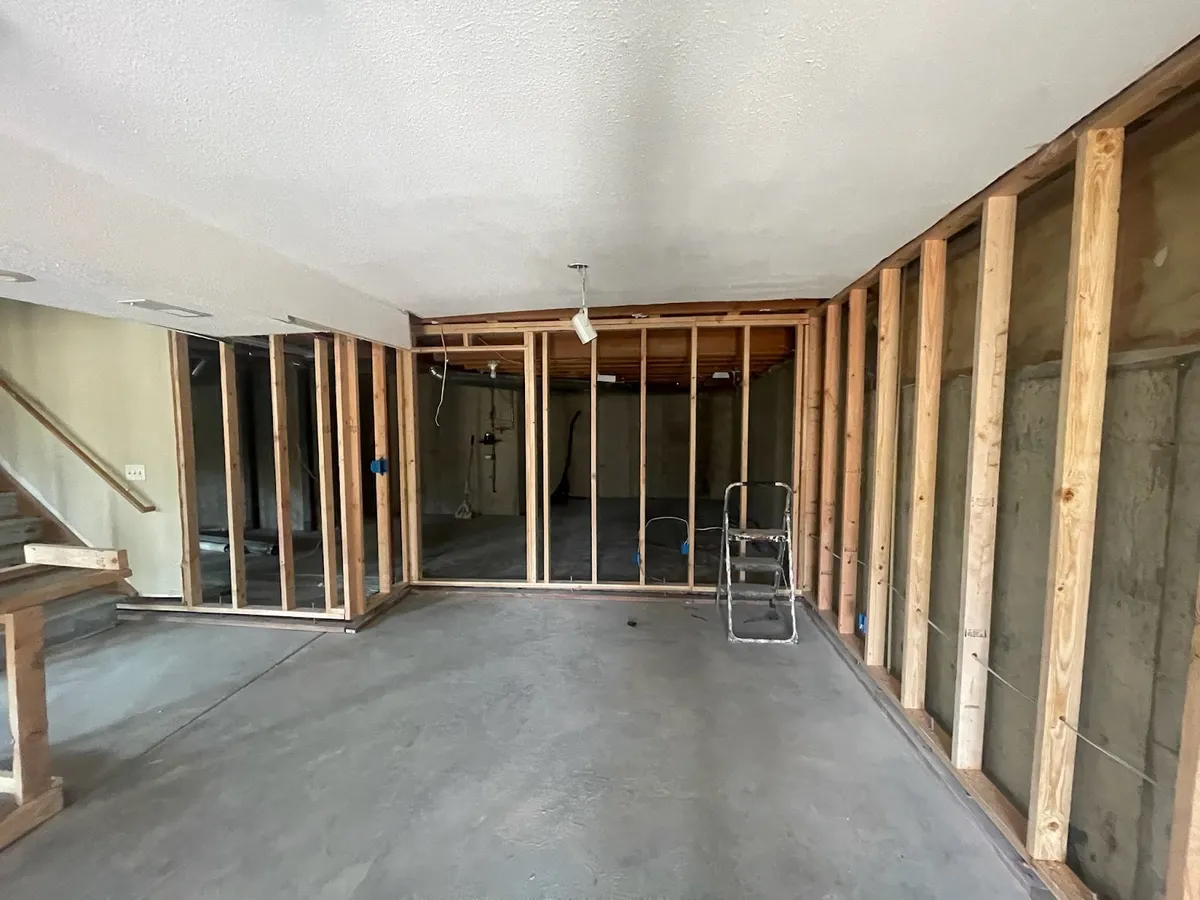
Basement Finishing in Broomfield, CO: Permits, Egress and Design
A finished basement is one of the most useful upgrades a Broomfield home can get. It adds a bedroom, an office, a family room or a place for guests without changing the footprint of the house. This guide covers what Broomfield homeowners should know before starting: permits, egress, moisture, layout and how a typical project runs.
Do you need a permit to finish a basement in Broomfield?
Yes, in almost every case. Broomfield is a combined city and county, so building permits go through the City and County of Broomfield rather than a separate county office. Finishing a basement usually involves framing, electrical, plumbing and mechanical work, and each of those is inspected. A permitted finish protects you when you sell, because buyers and appraisers look for it, and it keeps your homeowner's insurance on solid ground.
Your contractor should pull the permit, schedule the inspections (typically framing, electrical, plumbing, insulation and final) and be on site when the inspector comes. If a contractor suggests skipping the permit, treat that as a warning sign.
What does egress mean, and when do you need it?
Any basement bedroom needs an emergency escape and rescue opening, usually an egress window with a window well. The opening has to be large enough to climb out of, low enough to reach, and the well has to leave room to get out and away from the house. If your basement has only small hopper windows today, adding a bedroom means cutting a larger opening in the foundation wall. It is a common job, but it has to be planned early because it affects the layout and the permit.
How do you keep a Broomfield basement dry?
Much of Broomfield sits on expansive clay soils that swell when wet and shrink when dry. That is why many local basements have floating (slip) walls: interior walls hung from the ceiling joists with a gap at the bottom so the slab can move without cracking the drywall above. Before anything is framed, a good contractor checks grading and gutters outside, looks for signs of past water, and plans insulation and vapor control that suit a below-grade space.
What can you fit in a finished basement?
- Family or media room with recessed lighting and sound insulation.
- Guest bedroom with an egress window and a closet.
- Bathroom, easiest where rough-in plumbing already exists; otherwise an ejector pump may be needed.
- Home office or gym with good lighting and dedicated circuits.
- Wet bar or kitchenette for entertaining.
- Storage kept around the mechanical room so the furnace and water heater stay easy to service.
How long does a basement finish take?
Most basement finishes take several weeks of construction after design and permitting, depending on size, whether a bathroom or egress window is added, and inspection timing. Planning the layout and choosing finishes before work starts is the best way to keep the schedule steady.
What should you ask a basement contractor?
- Will you pull the permit and attend every inspection?
- How do you handle floating walls and moisture control?
- Who does the electrical and plumbing, and are they licensed?
- What warranty do you give on the work?
- Can I see finished basements you have done nearby?
Mile High Remodel finishes basements across the north Denver metro, including Broomfield, Westminster, Arvada and Thornton. See our basement remodeling services, or book a free consultation to talk through your space.
Frequently asked questions
Can I finish just part of my basement?
Yes. Many homeowners finish a family room and bedroom now and leave storage or a future bathroom unfinished. Planning the rough-ins at the same time makes adding them later much easier.
Does a finished basement count as living space?
A permitted, properly finished basement is usually described as finished below-grade space in a listing. Bedrooms need egress to be counted as bedrooms.
Do I need a new egress window for an office?
An office is not a sleeping room, so it does not always need egress. If the room could ever be used as a bedroom, adding egress now keeps that option open.
Will finishing my basement change my HVAC?
Often a basement can be served by extending existing ductwork. Your contractor should check the furnace capacity and plan supply and return air for the new rooms.
More guides: Basement Egress Windows in Denver: Code, Permits & What to Expect · Basement Finishing and Remodeling in Westminster, CO
